Still, nuptials tend to be rooted in tradition.
Even the language used to discuss getting married can be highly traditional.
But this is onlypartiallytrue.
There’s a much richer cultural practice behind this common phrase.
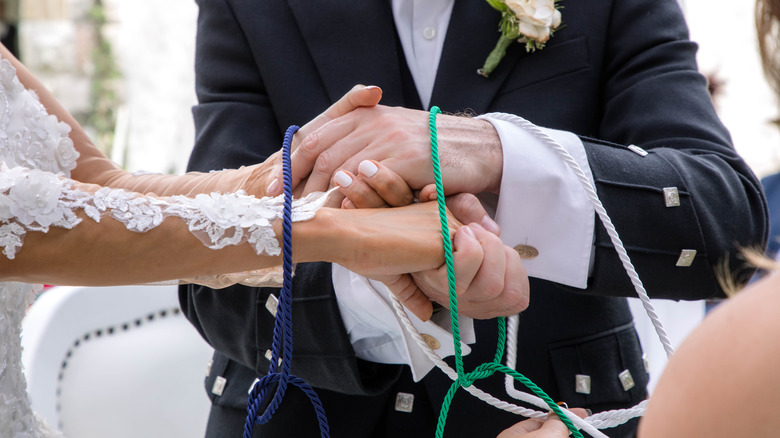
These days though, handfasting usually takes place on the day of the wedding or in vow renewal ceremonies.
However, they all involve making knots with fabric or cords to represent unity.
Knotted motifs are commonly placed in bridal rooms and wedding venues for good luck.
Knots are also incorporated in wedding gowns and suits in the form of knotted buttons and accessories.
In China’s neighboring country of Japan, knots are also commonly associated with fortune and protection.
AsMake Magazineexplains, knots adorning gifts are a sign of “affection, warmth, and togetherness.”
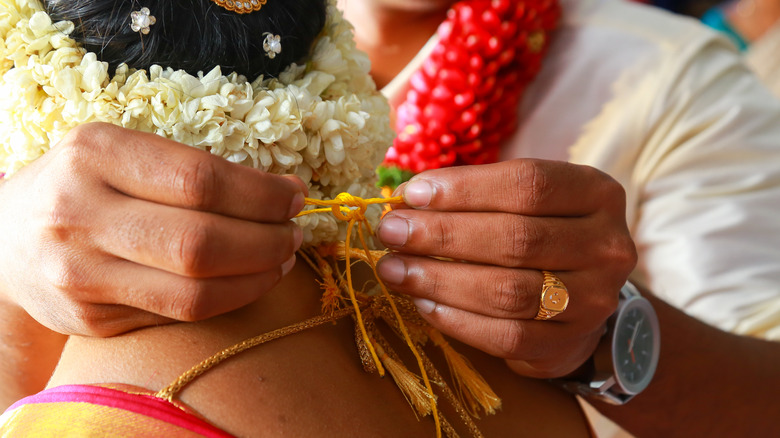
Similar to handfasting, Indian weddings also have their own knot-tying ritual.
