Kathie Lee Giffordand Rabbi Jason Sobel may seem like an odd pair at first.
What they have in common is a love for God and exploring history.
And because of that, they formed an unlikely but powerful partnership.

The book was an instant New York Times bestseller.
Gifford sat down for an exclusive interview with The List to discuss their project.
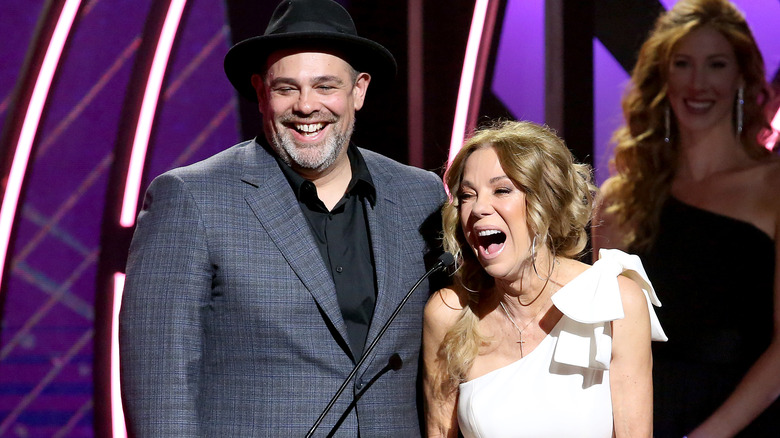
I guess we’re like the odd couple.
We seem like, “Wait a minute.
How did she get with him?
and [how did] he get with her?”
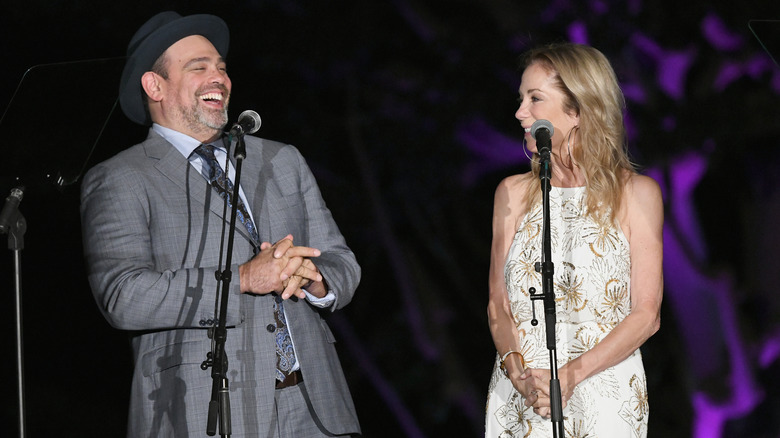
We had a mutual friend, a lovely woman named Leslie Burbage, who used to attend his church …
He was a pastor of a church in Malibu.
She said, “You’ve got to meet Rabbi Jason.”
I went, “Oh, I don’t have time.
I was never in a good mood during that time back then.
[Burbage] said, “He’s going to be there.

I’ll bring him by the studio.”
I said, “Okay.
I’ll take him for a quick lunch.”
I take him to lunch.
It’s a “bah humbug” moment.
I don’t hate Christmas.
The true essence of Christmas is the birth of Christ.
We don’t celebrate it in the way that it actually happened, and it frustrates me.
It’s presents and mess.
It’s not shalom.
Anyway, he sat there for a long time.
I said, “Okay.
Good luck with that not that I believe in luck, but go ahead.”
He went on for about two hours to regale me about the true story of the nativity.
It was so in-depth.
It was so exciting that it literally changed my mind about Christmas.
I felt I needed to do that because there’s so much biblical illiteracy in the world.
People were growing up with bad translations of the Bible and bad myths that were persistent …
I realized about 50 pages in that I didn’t have a book.
I had a pamphlet.
My knowledge only went so deep.
You have the knowledge that I don’t have.
We co-wrote that book.
I thought maybe a thousand people would buy it.
Well over 700,000 at this point [have bought it].
It’s been a huge publishing phenomenon.
It’s with a different rabbi.
I want to write them all with different rabbis because they all have a different perspective.
He and I have written this new book together.
It’s called “The God of the Way.”
That movie is called “The Way” … People go, “Wait, wait, wait.”
They don’t get that the first thing is the movie.
Why did it take 40 years?”
I did all the lifting on the movie.
He did most of the heavy lifting on the book.
We’re a really good team.
I started studying rabbinically.
What was Israel like at the time?
What was the cultural relativity?
What was the geopolitical environment of the day?
I want to know what Cleopatra smelled like, not just her story.
Fill in the details for me.
Studying rabbinically does that.
My faith came to life again.
I was a once deeply committed, seeking believer of Jesus and truth.
Over the years, I’d gotten bored.
I’d gotten lukewarm because nobody was teaching this way.
I started to die on the vine.
The word of God says, “My people perish for lack of knowledge.”
Everything’s fuzzy but not accurate.
If I’m going to base my entire life on something, I want it to be the truth.
I started studying it.
The more I studied it, the angrier I got.
People say, “Wait a minute, you’re a Christian.”
No, it’s righteous anger.
Why hasn’t anybody ever told me this before?
That’s what everybody tells me now that I write these books and I share this information.
They all say the same thing: “Why hasn’t anybody ever taught me this before?”
So, that’s why.
I don’t love doing it, but I’m called to do it.
Do you feel like writing these books is also making that [knowledge] more approachable for people?
I’m the waymaker.
I’m the messenger.
I get it from him, and then I take it to the people.
He’s become a very good communicator in his own right.
He was not as good as he is when I first met him.
He can carry his own.
He doesn’t need me.
That’s for sure.
He’s written a couple of other books on his own.
It’s that deep.
He’s truly a master at it, but I make it more human.
I make it more accessible.
You grow every time, mostly in your faith.
It was shot under really, really rough circumstances during COVID … that had its own challenges.
I couldn’t get any money for the project.
I was out of money, and nobody wanted to give it to me.
They didn’t see the value in it.
“Why are you doing a movie with music and narration?”
I said, “That’s an ancient art.
It’s called an oratorio.”
It’s one of the longest forms of storytelling in the world.
You tell a story.
You narrate a story, but you underlie it.
You put it into a bed of music to make it exciting and enriching.
The Bible is not a dead 5,000-year-old book.
It’s more alive than ever.
All these stories are about real people, things that really did happen.
People don’t know the stories, and they certainly don’t know the power of them.
It’s thrilling to be able to do that.
I’m not finished with that.
This will not be my last movie, I don’t think.
I don’t know.
I ask myself that too.
Now, I live in Tennessee, and I don’t have to go to the studio anymore.
It gives me a lot more free time.
It makes it much more difficult.
I feel very freed up now to do the work that I was born to do.
It’s an exciting time for me, but I also don’t waste time.
I’ve learned as I’ve gotten older the beauty of being able to say no to things.
I have work to do.
I’ve done everything else.
I’ve done it all.
I have no ego, and I don’t need to win any more awards.
I don’t need any more Grammy nominations, or Emmy wins, or Oscar mentions.
I don’t care about any of that stuff.
I want people to know that Jesus loves them.
How do I tell people that Jesus loves them?"
They don’t know it yet.
If I’m to be the one that’s able to tell them, it’s a great privilege.
I do want to write a few more oratorios.
I started two others.
One will be “The God of Holiness.”
It’s going to be very controversial, which I like to be.
People are going to go, “Don’t mess with my manger.
I like my tinsel at Christmas time.
I like my Christmas tree.
Don’t mess with my manger.”
You don’t have to accept it or believe it, but I need to tell it."
That first story that the rabbi told me when we sat there in the restaurant …
I sat there, absolutely mouth agape, for three hours.
He told me this story.
I went, “Oh my God.”
It was so exciting.
I can’t wait to tell it.
That’s really it.
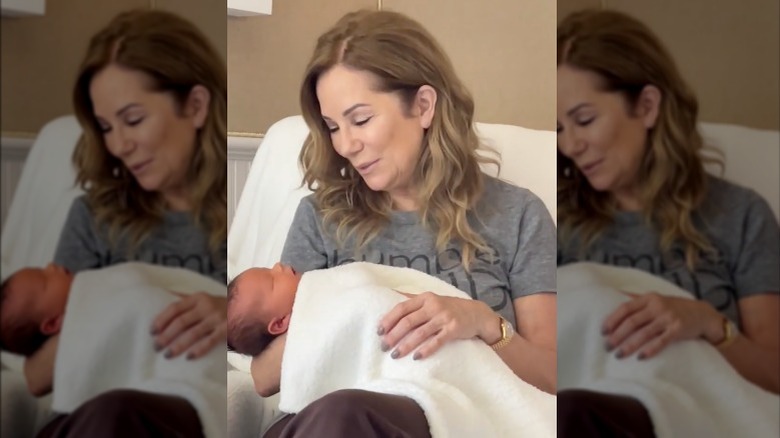
I have a new grandson.
I want to spend a little more time with him.
I want a rich, joyful life, stay healthy, and don’t sweat the stupid stuff anymore.
It’s not necessary …
I feel like that’s who I am right now.
I’m at the feet of Jesus, and no one can take it from me.
There’s not a better way.
There’s not a better place to be than right there, at the feet of Jesus.
A lot of them are being recorded now in other people’s lives.
That makes me happy.
You don’t write a song to put it on a shelf.
I go, “Oh, yes.
I’m excited.”
They’re all brilliant singers and performers.
That’s a kick in the pants.
That is so much fun.
That [is] a life I could not have in Greenwich, Connecticut.
It was surrounded by hedge funders.
They don’t knock on your gate, first of all, and say, “Hey, yo.
You want to write a song?”
Here, people show up [and ask], “Want to write a song?”
If I can, I go, “Yeah, come on in.”
It’s a very different lifestyle in Greenwich, Connecticut, believe me.
I don’t miss that.
I miss my home there.
I miss my little grandson, but I get back enough to get a taste of it.
This is where I’m supposed to be now, in Tennessee, for sure.
Her new role as a grandmother
You mentioned your grandson.
What’s it been like for you, becoming a grandmother?
It was all familiar.
I said, “Okay, let’s do this the old-fashioned way.”
I’ve got him in my arms, then I started [to sing].
It was so sweet.
Little babies know that, inherently.
They’re miracles straight from God."
It’s a great blessing.
He’s [over] seven weeks old.
“The God of the Way” is now available in bookstores everywhere.
VisitFathom Eventsto find a screening of “The Way” near you on September 1.
This interview has been edited for clarity.
